Indoor timber structure assembly with corrugated roof, ladder, beams, cardboard boxes, and two people working

Are your wooden gazebos easy to build?

Yes, absolutely! We create all of our structures – gazebos, pergolas and pavilions for DIY home build. We do not specify that you need an installer.

Our products are top of the line. We use 100% premium cedar, aluminium roofing, and hardware. Structures are prepared as ‘Ready to Assemble’ flatpack kits. The premium Cedar Wood that we use is pre-stained, pre-cut and pre-drilled.  Parts are all labelled and the hardware is bagged. Each structure comes with a step by step illustrated build manual. Another key point is that each page details the parts and hardware required for that stage of the build.
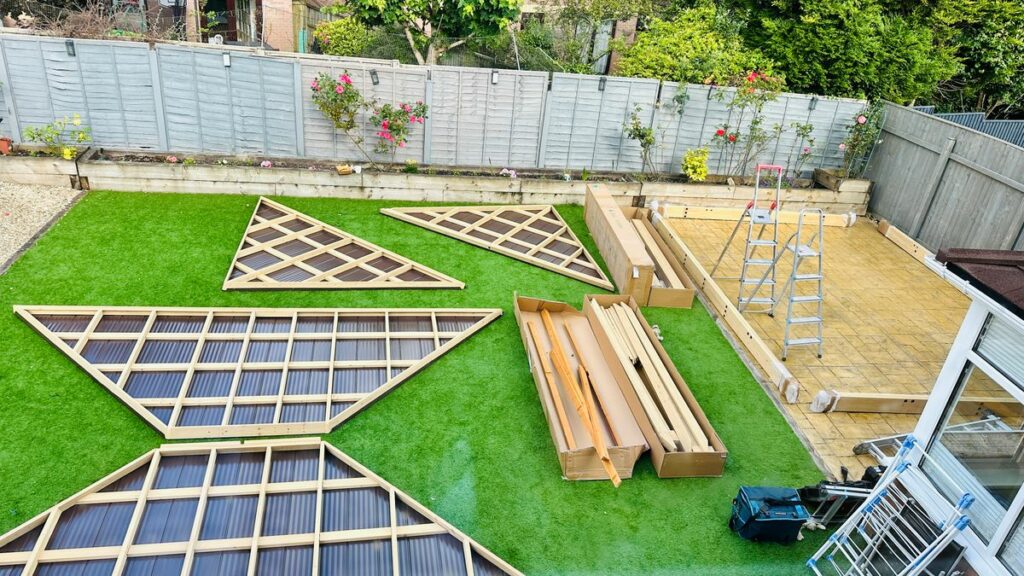
An overhead view captures the unboxing and preparation phase for assembling a large wooden outdoor structure, possibly a gazebo, pergola, or pavilion, in a suburban backyard.

Materials and Components
The components of the structure are laid out on a vibrant artificial grass lawn.

Roof/Wall Panels: Four large, triangular panels are positioned in the foreground and center.

Two smaller triangles feature a light wood lattice design.

Two larger, wider triangles are composed of a light wood frame with a dark brown, corrugated material (likely polycarbonate or metal roofing), suggesting they are roof sections.

Structural Timber: Two open cardboard boxes contain various sizes of light-colored wooden beams and posts, which are the main structural elements of the kit.

Packaging: The rest of the disassembled structure's parts are contained within long, rectangular cardboard boxes situated near the back and right side of the lawn.

Tools/Equipment: A small black tool bag or box is visible near the bottom center, and a silver stepladder is set up on the patio area, indicating active construction.

Backyard Setting
The assembly is taking place in a neat and well-maintained residential garden:

Ground Cover: The garden is split between the artificial green grass and a paved area or patio composed of lighter, square pavers on the right.

Fencing: The background is lined with a light gray wooden fence.

Landscaping: A raised garden bed runs along the base of the fence, featuring some soil, a few decorative elements, and climbing pink roses growing against the fence.

Adjacent Structures: A small section of what appears to be a white conservatory or garden room is visible in the bottom right corner, reflecting the light.

The photograph documents the initial, organised stage of a DIY outdoor construction project.

Would you use a carpenter, joiner or handyman to build?

No, not necessarily. A tradesperson experienced and knowledgable in flat pack builds of all natures would be better, if you really feel you have to bring someone in. Somebody like Flatplack Builders for example. Who has regular experience building flatpack items from scratch.

This is a promotional image for a business named "Flatpack Builders," showcasing their assembly work on a completed wooden gazebo in a residential backyard.

Text and Contact Information
The image contains several text overlays for business promotion:

Top Title: Flatpack Builders (in large red text).

Contact Information:

Email: Info@flatpackbuilders.co.uk

Phone: Tel / Text 07960237319

Bottom Footer: Find us on all socials (in white text).

Small Logo: A small graphic for "Flatpack Builders Furniture Assembly" is visible on a cardboard box near the bottom right.

Featured Structure
The main focus is a recently assembled wooden gazebo or pavilion:

Material: The structure is made of medium-brown stained wood, featuring four substantial square support posts.

Design: The posts have a slight decorative taper at the base and are connected to the roof structure by curved wooden braces (arches).

Roof: The hip roof features a dark material (likely metal or polycarbonate) over the central area, matching the components seen in the first image, and appears to have a vented or light-transmitting section.

Location: The gazebo is centered over a square patio area.

Backyard Setting
The structure is integrated into a neat, multi-surface yard:

Ground Cover: The floor is a mix of square, light gray paved stones (patio) and artificial green turf surrounding the patio.

Fencing: The background is lined with a dark gray or black wooden fence, providing a contrasting backdrop.

Foliage: Some green ivy or climbing plants are visible along the fence line, and the sky is bright blue with a few scattered clouds.

Tools and Context: A yellow-green assembly mat is centered beneath the gazebo, and a power tool case (black and blue) and a large cardboard box (with the company logo) are visible in the foreground, suggesting the assembly was just completed.

Do you need to buy hardware for the build?

Yardistry Direct supply bagged hardware with every structure. Each page in the product manual specifies which hardware is required for each build stage. In terms of anchoring, we supply post mounts with the structure. Therefore this gives you the flexibility to permanently install your structure to a pre-existing or new wood or concrete surface. The hardware to attach the Post Mount to the structure is included. You will need to purchase the hardware to mount the structure permanently. Source this at your local DIY or hardware store.

Do I need to anchor my structure?

Ultimately, it is essential to securely anchor a Yardistry Direct gazebo to the ground. Yardistry Direct include ground anchor brackets with all cedar gazebos and pavilions. Therefore every kit includes 8 mounting plates (2 per post) for mounting to the base of the post. Decorative plinths partially conceal these plates.

How long should it take me to build?

This is entirely dependent on how many of you are building and whether you have accessories to add on. Consequently the more accessories you add (walls, gutters, bar counters etc) the longer the build will take. Also, we always recommend it is a minimum two person build, especially when it comes to the roof. Ultimately, many customers set aside a weekend to build. So, the larger the structure, the more people you will likely require to assist in the build.
Similar Posts