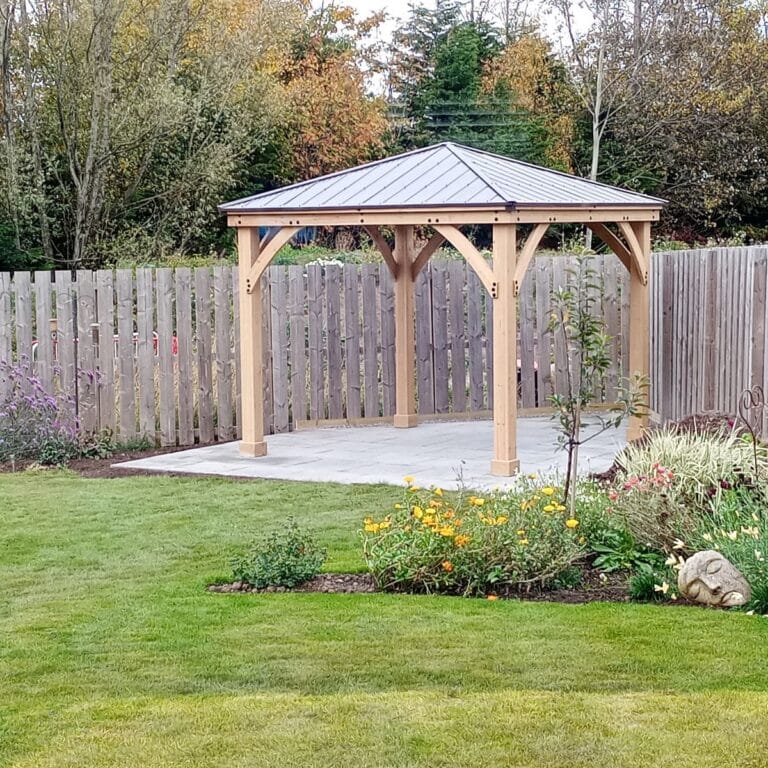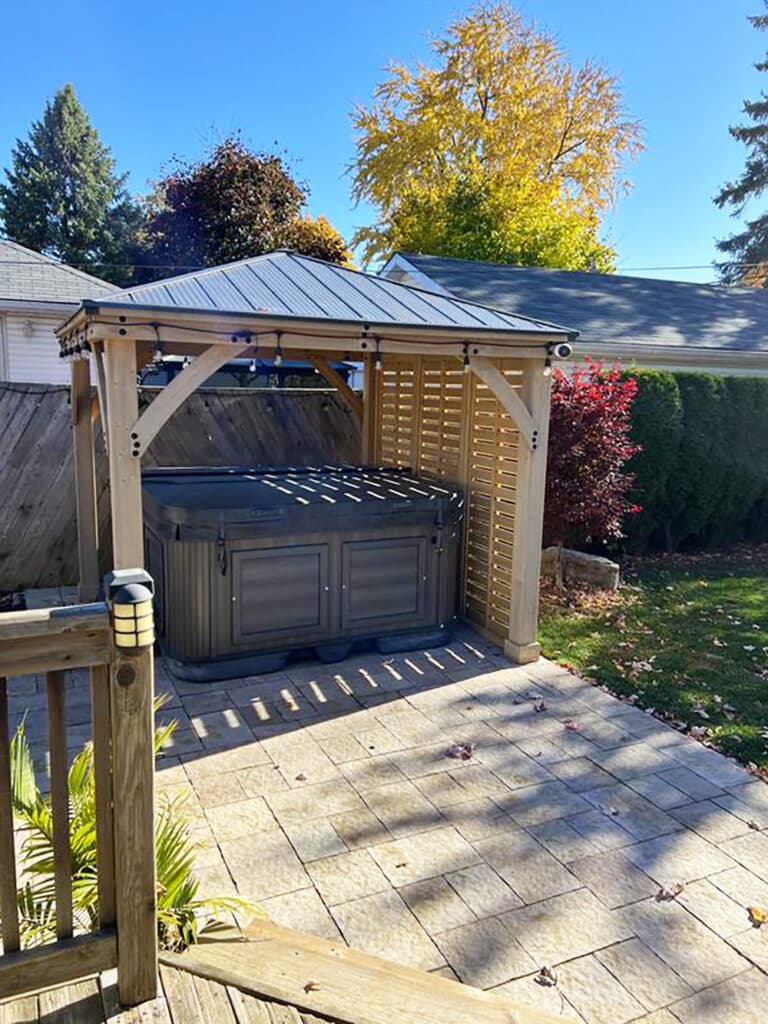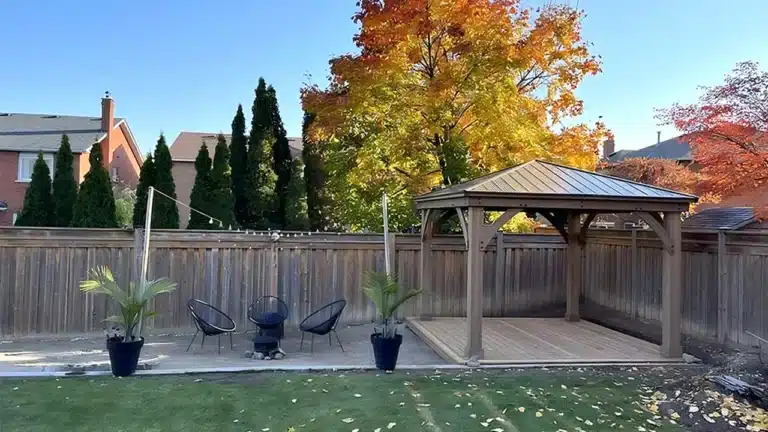
Close-up of wooden gazebo with dark metal roof and curved braces, set near stone and brick walls in a backyard setting.

What is the best roofing for a gazebo?

When it comes to outdoor living, what is the best roofing for a gazebo?  Whatever you choose can make a big difference in terms of aesthetics, durability, and overall functionality. Here are of the best types of roofing to consider.

Aluminium Roof Gazebos

One popular option, when looking for the best roofing for a garden gazebo is an aluminium roof. These roofs are known for their durability, as they are resistant to corrosion, rust, and weather damage. Additionally, aluminium roofs are lightweight and easy to install, making them a popular choice for DIYers. Contrary to common belief, aluminium is fantastic at dissipating heat, so they are cool in summer. They look modern and stylish, so will likely complement your garden’s aesthetic. Learn more about our Aluminium Roof Gazebos.

A close-up architectural photograph showcases the sturdy corner construction of a modern outdoor wooden gazebo or pavilion where it meets the side of a house. The image is taken at eye level, focusing intensely on the materials and joinery.

The gazebo is built with thick, robust timber posts and beams, displaying a smooth, light-brown, natural wood finish. The main vertical corner post is prominent, with heavy, angled support beams—or braces—bolted securely into it and the horizontal header beams above. Multiple circular bolt heads or dark filling plugs are visible on the wood surfaces, emphasizing the durable and engineered quality of the structure.

The roof is a key feature, showcasing a steeply pitched, hipped design. It is covered with dark, corrugated metal panels, likely charcoal grey or a deep bronze color, bordered by a sleek, black trim along the eaves. The underside of the roof structure, visible beneath the light-colored wooden beams, is a dark color, providing a finished ceiling appearance.

The background shows the exterior walls of the adjacent house, which features a mix of siding materials, indicating a typical suburban or residential setting. To the right, the wall is constructed of large, textured stone or brick in warm, reddish-brown and tan colors. To the left, the wall shifts to dark, possibly navy blue or charcoal, horizontal siding. Above the structure, the white guttering and roofline of the house are partially visible. A section of a wooden fence or gate is also seen to the far left.

The lighting is bright and even, highlighting the clean lines and contemporary materials. The photograph effectively contrasts the natural, warm wood of the gazebo frame with the dark, industrial metal of the roof and the varied textures of the house's exterior finishes, demonstrating a high-quality, permanent outdoor addition.

Wooden Roof Gazebos

Another popular option is a wooden roof. Wooden roofs give gazebos a rustic, natural look that is perfect for gardens. They can be made from a variety of different types of wood, including cedar, pine, and redwood. Wooden roofs are also sturdy and provide good insulation, so they can keep your gazebo cool in the summer and warm in the winter. One thing to keep in mind with wooden roofs, however, is that they require more maintenance than other types of roofs, as they may need to be resealed or repainted periodically.
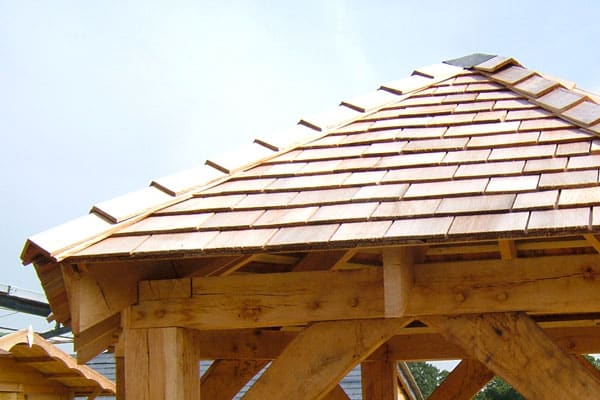
A close-up architectural photograph focuses on the roof and structural joinery of a timber-framed gazebo or outdoor pavilion, emphasizing traditional craftsmanship. The image is taken on a bright day against a pale sky.

The roof is the most prominent feature, covered in overlapping wooden shingles or shakes that display a warm, natural light brown to golden color. The clean, defined edges of the individual shingles are clearly visible, suggesting they are new or well-maintained cedar or similar wood. The roof is steeply pitched, with the front edge (eaves) overhanging the main structure.

The supporting structure beneath the roof is constructed from heavy, rough-hewn timber, characteristic of traditional framing techniques like post-and-beam. The wood is a deep golden-brown, possibly oak or an older, cured softwood, and exhibits natural grain, knots, and slight texture, unlike the smooth modern wood in other images. Visible details include a thick horizontal tie beam, an upright support piece directly beneath it, and an angled support beam—or brace—extending downwards to the right (the corner post itself is mostly obscured). The timber connections appear robust, using classic joinery techniques, though specific fasteners are not clearly visible.

The underside of the roof eaves is visible, showing the wooden decking and rafters that support the shingles. The framing elements beneath the eaves are substantial and functional.

In the lower left corner, a portion of a smaller, similar-style structure is partially visible, suggesting this is part of a larger complex or outdoor display. The background is mostly a pale, overcast or bright white-blue sky, which provides a high-contrast backdrop that accentuates the warm color and texture of the wood shingles and beams. The overall impression is one of timeless, durable, and rustic outdoor construction, prioritising natural materials and substantial timber framing.

Thatched Roof Gazebos

If you want to give your garden gazebo a unique look, a thatched roof is a great option. These roofs are made from dried grass or other natural materials, and they are known for their distinctive appearance. Thatched roofs are also environmentally friendly, as they are made from renewable resources. However, they do require more maintenance than other types of roofs, as they may need to be replaced periodically and are more susceptible to fire.
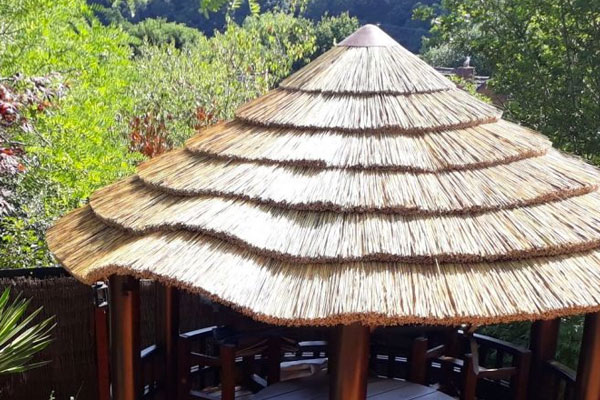
A bright, sunny, close-up photograph focuses on the distinctive, tiered roof of an outdoor tiki hut or thatched gazebo, suggesting a tropical or exotic setting.

The most prominent feature is the roof, which is made of thick, natural straw or reed thatch. The thatch is applied in multiple, layered tiers, creating a dramatic, stepped cone shape that rises to a central peak. The layers cast deep shadows on one another, emphasizing the texture and depth of the material. The straw is a warm, golden-brown color, catching the sunlight beautifully. At the very peak of the roof, a small, dark conical cap finishes the structure. The substantial overhang of the thatch provides significant shade.

Below the thatched roof, the supporting structure of the gazebo is partially visible. The vertical posts and beams are made of dark-stained or naturally dark wood, contrasting sharply with the lightness of the thatch. The interior space glimpsed beneath the eaves shows dark wood railing or seating and a light-colored surface, possibly a round table. To the left, the dark frame supports a section of fencing or siding made of woven bamboo or reeds. A piece of a lush, broad-leaved palm-like plant is also visible near the frame.

The background is dominated by a dense and vibrant green landscape. Numerous trees and bushes with rich, varied green foliage fill the scene, confirming the tropical, garden, or heavily planted outdoor environment. The bright, high-contrast sunlight suggests midday, illuminating the golden color of the thatch and the deep shadows underneath the canopy. The overall image evokes a strong feeling of relaxation, shade, and a vacation-like atmosphere, ideal for an outdoor dining or lounge area.

Asphalt Shingle Gazebos

Asphalt shingles are another roofing option for garden gazebos. They are made from a fibreglass mat base that is coated with asphalt and covered with ceramic granules, so they are not as environmentally friendly as other roofing materials. They come in a wide variety of colours, so you can choose one that complements your garden’s look. Whilst they are a durable cheaper option, they can be more prone to damage than other roofing materials if something heavy, like a branch or hail, falls on them.
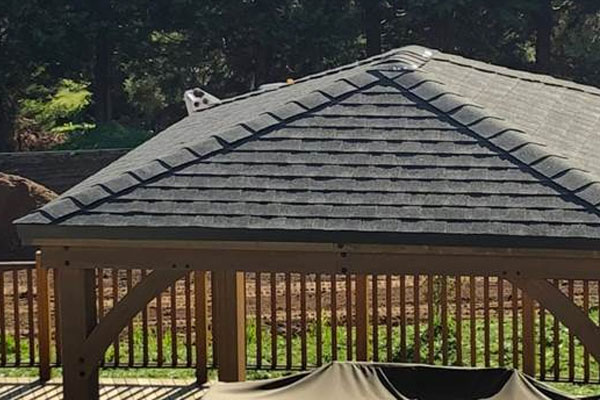
A photograph captures the upper portion of a wooden gazebo or pavilion structure, showcasing its roof and railing against a backdrop of trees on a sunny day.

The roof is prominently featured, characterized by a classic, multi-faceted pitched design, likely a hip roof. It is covered in dark gray or black asphalt shingles, laid in neat, overlapping rows. The ridge cap, running along the highest peak, is visible. Interestingly, a small, dark object with white spots, possibly a spotted stone or decorative finial, is resting on or built into the roof near the ridge on the left side. The roof overhangs the main structure slightly, finished with dark trim.

The main structure beneath the roof is built from light brown or medium-stained wood. Visible details include a thick horizontal header beam and an angled support brace beneath it, indicating a sturdy frame. This area appears to define a comfortable outdoor living space.

The enclosure beneath the header beam is finished with a wooden railing system. The railing consists of thin, vertical wooden spindles or balusters set closely together, providing safety and a degree of visual separation from the surrounding yard.

The gazebo is built on a deck or patio surface, visible below the railing. Part of the deck area is covered by a dark, possibly black, protective furniture cover in the foreground. Shadows cast by the railing indicate strong overhead sunlight.

In the background, the scene transitions immediately into a natural, wooded area. A dense mass of deep green trees and foliage fills the upper background. To the left, a mound of dark, loose material, possibly mulch, soil, or wood chips, suggests a landscaping project is ongoing nearby. The image conveys a sense of a finished, high-quality outdoor structure providing shelter and defining a specific activity area within a wooded backyard setting.

Which is the best Gazebo roof for you?

When it comes to choosing the best type of roof for your garden gazebo, there are several factors to consider, including durability, aesthetics, and maintenance. Aluminium roofs are durable, dissipate heat, easy to install, and look great. Wooden roofs are sturdy, provide good insulation, and give your gazebo a natural look, but require more maintenance. Thatched roofs are unique, environmentally friendly, but require more maintenance and are more susceptible to fire. Asphalt shingles can be a good choice as they are cheap and if installed correctly they are durable, but they are less environmentally friendly than the other choices. Ultimately, the choice of roof type will depend on your personal preferences, your budget and the overall style of your garden
Similar Posts